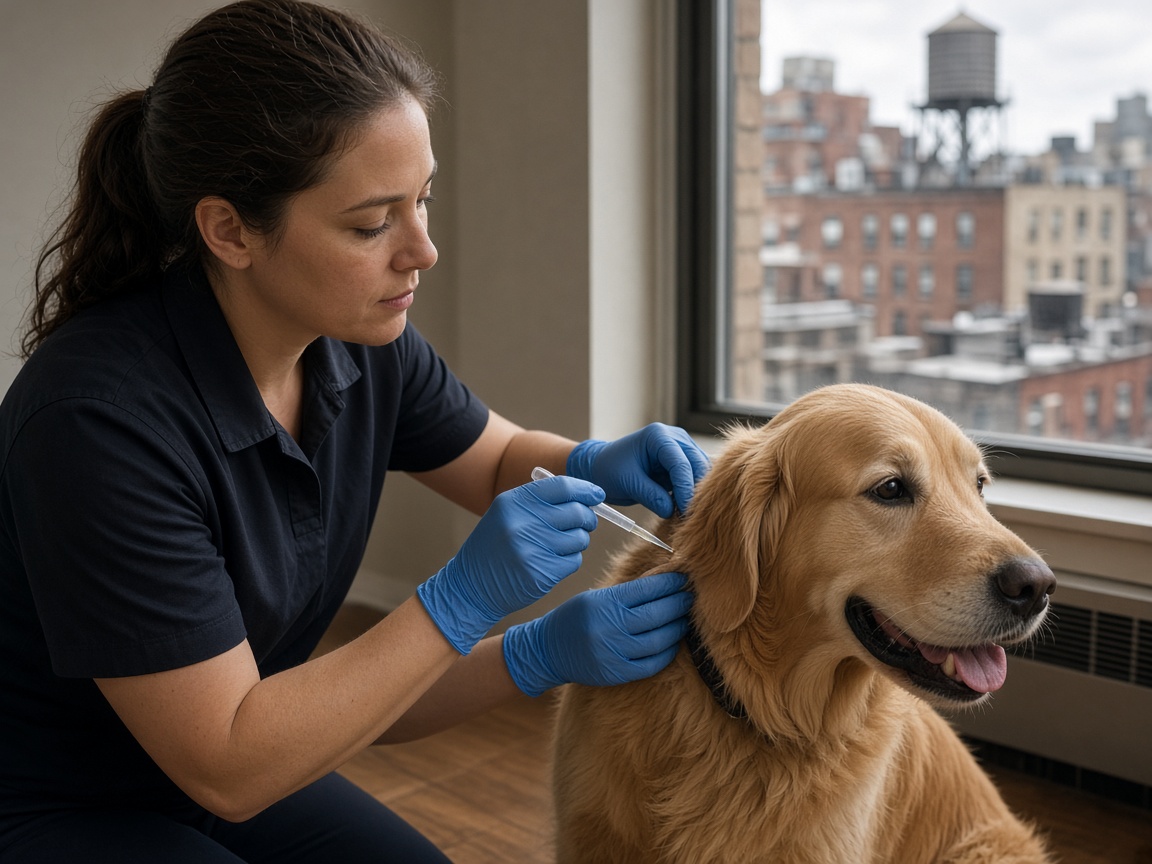
Manhattan apartments built before 1940 often feature plaster walls and wide baseboards that give fleas extra harborage points between units. Treating only visible carpets leaves eggs in these voids, so technicians apply low-toxicity growth regulators along baseboards and under radiators while keeping pets off treated surfaces for the labeled four hours. Building-wide coordination is sometimes required because fleas move through shared ventilation shafts in Upper West Side co-ops.
Summer humidity along the Hudson keeps flea larvae alive longer than in drier inland counties, so single applications rarely clear heavy infestations. Follow-up visits spaced ten to fourteen days apart target the new adults that emerge after the first treatment. Technicians also treat pet bedding and favorite resting spots on sofas with residual dusts that remain effective yet carry no odor once dry.
Ground-floor units near Central Park see extra pressure from wildlife that can reintroduce fleas through open windows or shared courtyards. In these cases, exterior perimeter treatments use plant-derived sprays that stay below pet-toxicity thresholds while still breaking the outdoor life cycle. Owners are advised to vacuum daily for two weeks after service to remove pupae that would otherwise hatch inside the apartment.
Technician insight
In Manhattan, the thing that catches most people out with Pet-Friendly Flea Treatment is how fleas travel through the shared walls and radiator pipes in pre-war buildings on the Upper West Side. A single apartment treatment often fails because the neighbors' units stay untreated, letting fleas walk right back in once the product dries.
Upper West Side Apartment Near Central Park
A ground-floor unit reported fleas despite monthly pet preventives. Inspection found heavy activity under radiators and in floor cracks typical of 1920s construction. Pet-safe dusts were applied to voids and a follow-up treatment was scheduled; the owner reported no new bites after the second visit.
Pet-Friendly Flea Treatment Services We Offer
✓Apartment Flea Inspection and Treatment
Full-unit inspection of carpets, baseboards, and pet areas followed by pet-safe residual sprays and insect growth regulators.
✓Pet Bedding and Furniture Flea Treatment
Direct application of low-toxicity dusts and sprays to mattresses, pet beds, and upholstered furniture without leaving residue that pets can ingest.
✓Pre-War Building Flea Control
Targeted crack-and-crevice work inside older plaster walls and radiator covers common in Upper West Side buildings.
✓Multi-Unit Flea Coordination
Synchronized treatment of adjacent apartments to stop fleas moving through shared walls and ventilation in Manhattan co-ops.
✓Balcony and Perimeter Flea Treatment
Exterior application around window ledges and small balconies to limit re-infestation from park wildlife or neighboring units.
How it works
- 1
Initial Inspection
Technician examines all pet resting areas, baseboards, and floor voids to map the infestation inside the Manhattan apartment.
- 2
Pet-Safe Application
Low-toxicity sprays and dusts are applied to cracks, carpets, and furniture while pets remain off-site for the required drying period.
- 3
Follow-Up Visit
Return treatment ten to fourteen days later targets newly emerged adults and any missed egg sites.
- 4
Prevention Guidance
Owner receives instructions on daily vacuuming and pet bedding washing to prevent immediate re-infestation.
Pricing
Pricing varies by apartment size, number of rooms, and whether multiple units require coordination.