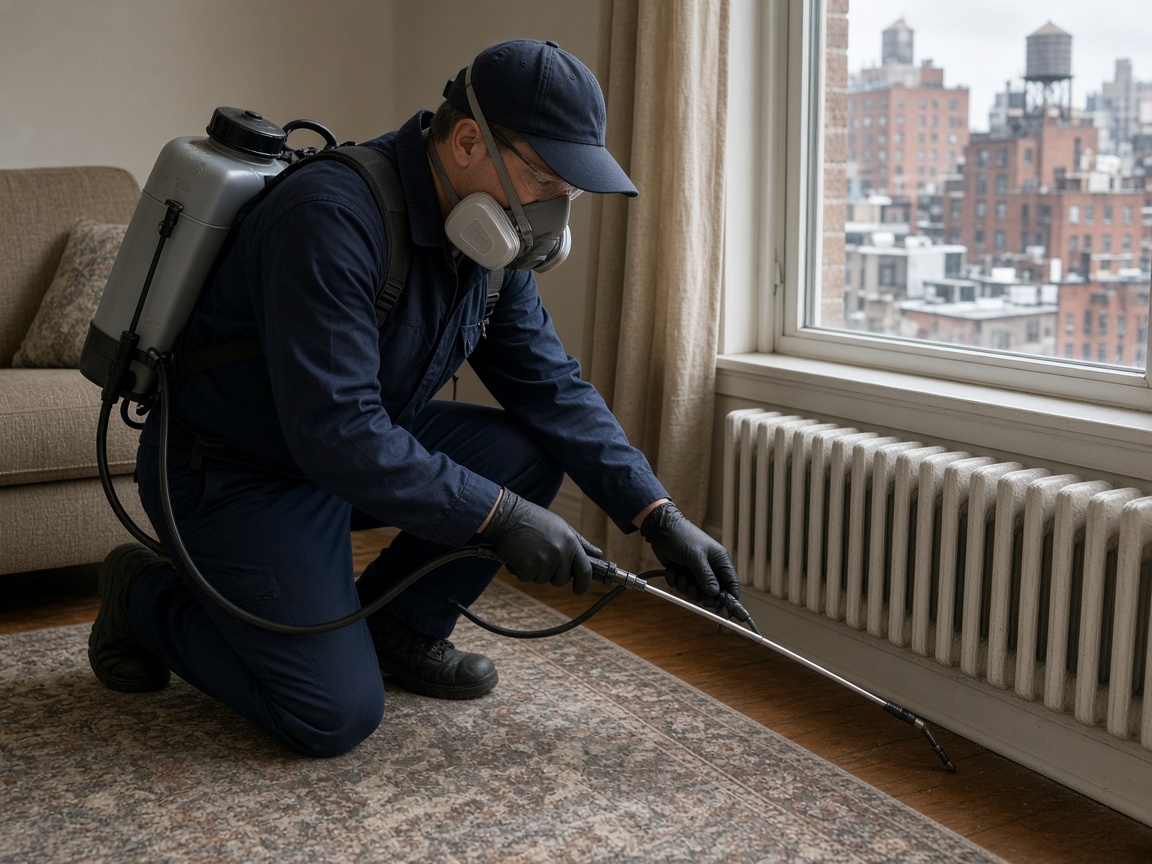
Manhattan's older housing stock, especially pre-war apartments and brownstones on the Upper West Side and in Harlem, features hardwood floors with area rugs, built-in cabinetry, and narrow baseboard gaps that let flea eggs and larvae hide deep. These conditions require thorough crack-and-crevice work plus repeated vacuum passes rather than simple surface sprays, because fleas move easily through shared walls and plumbing chases between units.
Summer humidity in the Manhattan area keeps indoor flea populations active longer than in drier climates, while winter forces more pets and people inside, concentrating the problem in living rooms and bedrooms. Technicians use low-odor insect growth regulators and targeted dusts in voids to break the life cycle without disrupting daily routines in dense multi-unit buildings.
Edge cases include treating around radiator covers, under radiators, and inside pet crates stored in small storage closets common in Central Park West buildings. Skipping these spots often leads to quick rebound because eggs survive vacuuming alone.
Homeowners should move lightweight furniture and clear floor clutter before arrival so every square foot receives full attention, especially in units with wall-to-wall carpet over old padding.
Technician insight
In Manhattan, the thing that catches most people out with Indoor Home Flea Treatment is how quickly fleas travel through shared walls and old plumbing chases in pre-war buildings on the Upper West Side; treating only one unit while neighbors have pets usually means the problem returns within days.
Upper West Side Apartment Rebound
A client in a 1920s building near Central Park West reported fleas returning after a store-bought spray. Inspection found eggs surviving in radiator covers and under a hallway runner that connected to the neighboring unit. Full crack treatment plus growth regulator application in all voids stopped the cycle; the follow-up visit confirmed zero activity.
Indoor Home Flea Treatment Services We Offer
✓Carpet and Rug Flea Treatment
Deep extraction and insect growth regulator application under area rugs and wall-to-wall carpet common in Upper West Side apartments to reach eggs missed by regular vacuuming.
✓Upholstery and Furniture Treatment
Targeted application to sofas, chairs, and pet bedding where adult fleas congregate in Manhattan living spaces without staining fabrics.
✓Crack and Crevice Flea Control
Dust and liquid treatments into baseboards, floor gaps, and radiator voids typical of pre-war buildings to stop larvae migration between rooms.
✓Multi-Room Infestation Service
Coordinated treatment of connected living areas in brownstones and apartments where fleas spread through hallways and shared walls.
✓Pet Sleeping Area Sanitation
Focused cleaning and residual treatment of crates, beds, and nearby flooring to break the flea cycle where pets spend the most time.
How it works
- 1
Initial Inspection
Walk-through of all affected rooms noting carpet type, furniture placement, and entry points in the specific Manhattan building layout.
- 2
Preparation Guidance
Instructions to move small items and vacuum thoroughly before technicians arrive to maximize contact with the treatment.
- 3
Application
Use of growth regulators, dusts, and spot sprays in cracks, under rugs, and on furniture followed by ventilation time.
- 4
Follow-Up Visit
Return inspection seven to ten days later to confirm no live fleas remain and apply any needed booster treatment.
Pricing
Pricing varies by square footage, number of rooms, and infestation level; upfront quotes provided after inspection.