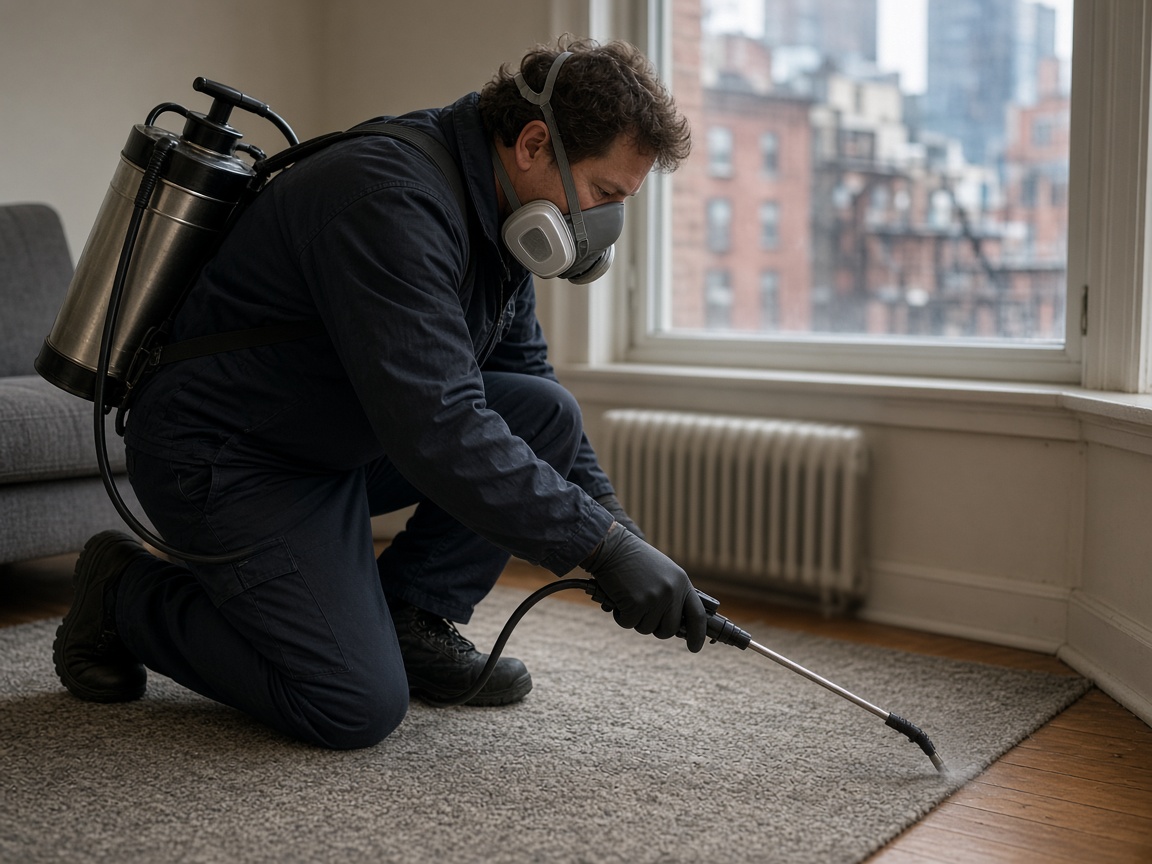
Flea eggs and larvae often settle deep in the seams of pre-war hardwood floors and under baseboards common in Manhattan buildings along Central Park West. These stages resist basic sprays because they hide in dust, pet bedding, and carpet padding where moisture from humid summer air helps them survive. Treatment requires insect growth regulators that interrupt the cycle without leaving residues that affect residents in tight urban units.
Edge cases appear in high-rises where larvae travel through shared ventilation or laundry chutes between floors. Older brownstones near the Upper West Side frequently have gaps around radiators and window sills that collect eggs after pets return from Central Park walks. Technicians must treat both the unit and immediate entry points while avoiding disruption to neighbors in adjacent apartments.
Materials focus on low-odor formulations safe for enclosed spaces, combined with thorough vacuuming to remove eggs before they hatch. Weather patterns matter because winter cold pushes fleas indoors, concentrating larvae in heated corners and under furniture. Every job includes checking for secondary sources like upholstered pieces or pet crates that can restart the infestation if missed.
Technician insight
In Manhattan, the thing that catches most people out with Flea Egg & Larvae Treatment is how eggs settle into the uneven gaps of pre-war parquet floors around Central Park West. Homeowners often vacuum only the center of rooms and miss the perimeter where larvae thrive in accumulated dust, letting the infestation restart after the first warm spell.
Upper West Side Apartment Infestation
A tenant noticed repeated flea bites on a pet after walks near Central Park. Inspection found eggs lodged along radiator pipes and under window sills in the pre-war unit. Treatment combined vacuuming with IGR application to cracks and pet zones. Follow-up confirmed no further larval activity.
Flea Egg & Larvae Treatment Services We Offer
✓Insect Growth Regulator Application
Applies targeted IGRs to carpet edges and floor cracks where larvae develop in Manhattan apartments, stopping the cycle at the source.
✓Vacuum and Habitat Removal
Removes eggs and larvae from rugs, pet bedding, and baseboard gaps typical in pre-war Central Park West units before chemical treatment begins.
✓Crack and Crevice Treatment
Treats narrow gaps around radiators and window frames that collect eggs in older Manhattan brownstones and high-rise units.
✓Pet Area Larval Control
Focuses on floors and furniture where pets rest after outdoor exposure near Central Park, reducing new egg deposits.
✓Follow-Up Monitoring Visit
Returns to inspect treated spaces in Upper West Side apartments for any remaining larvae activity after the initial application.
How it works
- 1
Detailed Inspection
Technician examines flooring, baseboards, and pet zones in the Manhattan unit to locate egg clusters and larval habitats.
- 2
Vacuum Preparation
Removes loose eggs and debris from carpets and cracks before any product is applied.
- 3
IGR and Residual Treatment
Applies growth regulators and targeted materials to interrupt development in hidden areas.
- 4
Client Guidance
Provides specific steps for vacuuming and pet bedding handling to prevent reintroduction from Central Park visits.
Pricing
Cost depends on unit size, number of rooms, and extent of hidden larval sites; upfront quote provided after inspection.