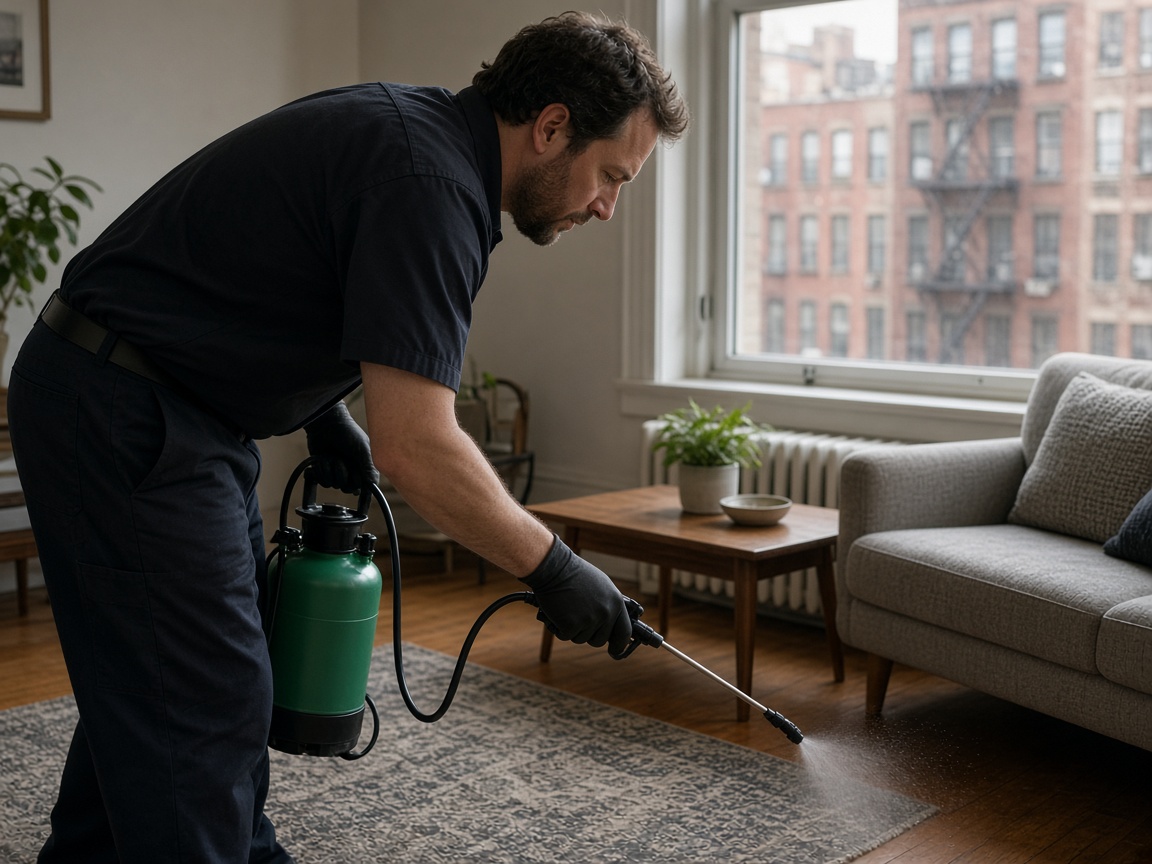
Manhattan's pre-war apartment buildings along Central Park West and the Upper West Side often feature wide-plank floors, radiator lines, and shared walls that let fleas move between units without notice. These structures hold warmth in winter, allowing flea eggs to develop year-round even when outdoor temperatures drop. Eco-friendly treatments focus on growth regulators and botanical dusts applied into cracks and under baseboards rather than broad sprays that drift into neighboring apartments.
Central Park and smaller green spaces nearby support wildlife that can reintroduce fleas to building perimeters. Treatment plans account for this by treating entry points on multiple floors and coordinating with building management on shared ventilation. Homeowners frequently overlook pet bedding stored in hallway closets or under-stair storage, which becomes a hidden source once fleas hitchhike on shoes from the street.
Because Manhattan units are small and tightly sealed, application volume stays low while dwell time increases. Technicians check behind radiators and inside window sills where humidity from steam heat creates microclimates fleas prefer. Follow-up visits focus on vacuuming patterns and laundry cycles rather than repeated chemical use, matching the pace of life in buildings where residents cannot easily vacate for days.
Technician insight
In Manhattan, the thing that catches most people out with Eco-Friendly Flea Treatment is how pre-war buildings on Central Park West let fleas travel through radiator pipes and floor gaps between units. Homeowners treat only their own apartment and miss the hallway closets or shared basement storage where eggs survive the winter steam heat.
Upper West Side Apartment Re-infestation
A resident on Central Park West reported fleas returning weeks after a store-bought spray. Inspection showed eggs behind the radiator and in a hallway storage closet shared with the neighboring unit. We applied growth regulators into the floor gaps and radiator lines, then coordinated a light treatment in the adjacent apartment. The follow-up visit confirmed no new activity after residents followed the vacuuming schedule.
Eco-Friendly Flea Treatment Services We Offer
✓Apartment Flea Treatment
Targets shared walls and radiator lines common in pre-war Manhattan buildings using growth regulators that stay effective between units.
✓Pet-Safe Flea Control
Applies botanical dusts and sprays around pet areas while protecting cats and dogs from residues that linger on hardwood floors.
✓Central Park West Perimeter Treatment
Addresses building edges near Central Park where wildlife can carry fleas back into lobbies and ground-floor units.
✓Multi-Unit Building Coordination
Works with building staff to treat adjacent apartments and common areas without triggering complaints from neighbors.
✓Flea Egg and Larvae Reduction
Focuses on carpet edges, under furniture, and storage closets where eggs accumulate in older Manhattan apartments.
How it works
- 1
Site Inspection
Walk through the unit and note floor type, radiator locations, and any shared-wall access points typical of Manhattan buildings.
- 2
Targeted Application
Apply eco-friendly dusts and insect growth regulators into cracks, under baseboards, and around pet zones without broad surface sprays.
- 3
Resident Guidance
Provide vacuuming and laundry instructions that fit small-apartment routines and reduce re-infestation from hallway traffic.
- 4
Follow-Up Visit
Return within two weeks to check treated areas and adjust for any missed spots behind radiators or in storage closets.
Pricing
Pricing varies by unit size and number of rooms requiring access behind radiators or into storage areas.