2026-11-27 ·
How to Spot Fleas in Manhattan Walk-Ups
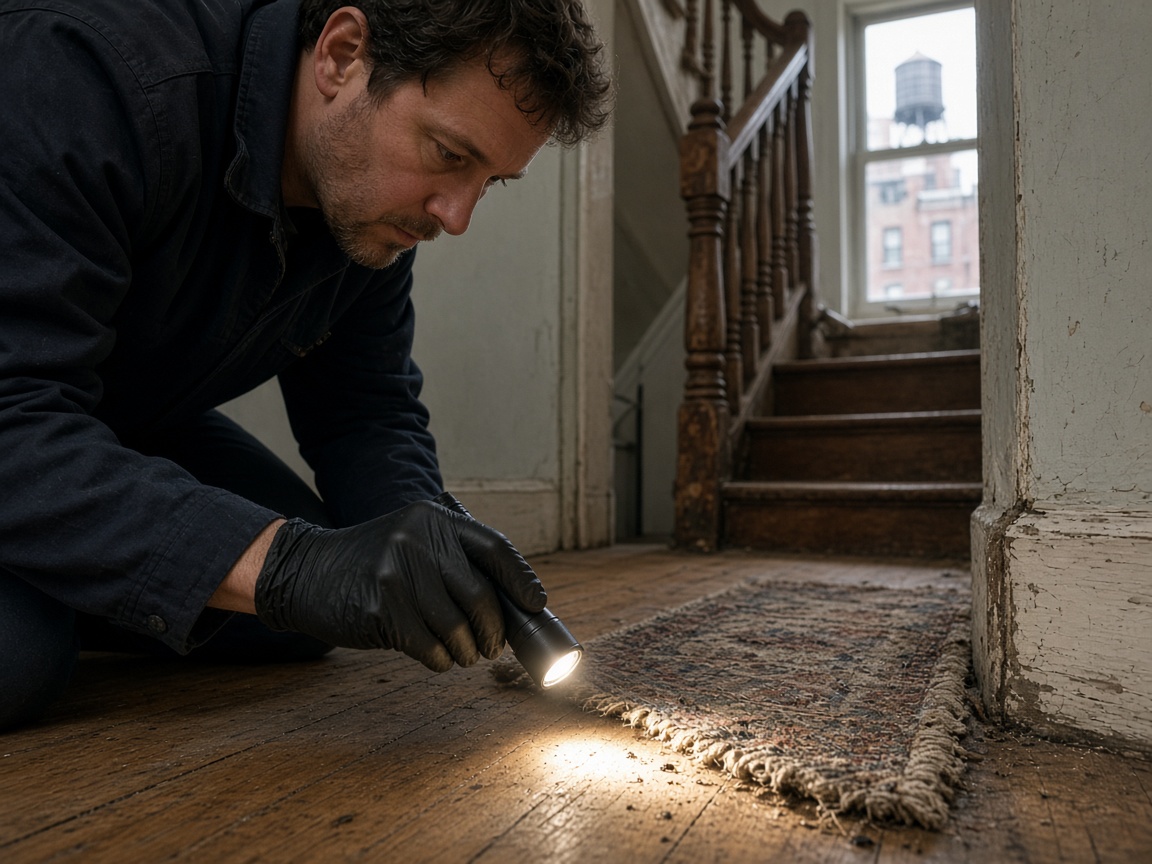
In Manhattan walk-ups, fleas first appear as tiny dark specks on light-colored floors or pet bedding that turn red when rubbed on damp paper, usually within 1–3 feet of baseboards in buildings from the early 1900s.
Visual Evidence on Floors and Walls
Walk-up apartments built before World War II feature narrow stairwells and exposed hardwood that collect flea dirt from pets tracking in from sidewalks along Central Park West or Columbus Avenue. Residents notice clusters of 1–2 mm black grains near radiator covers and under radiators where dust settles. These specks differ from ordinary dirt because they dissolve into reddish-brown streaks on wet tissue. In units with original parquet, fleas favor the gaps between boards that trap pet hair and skin flakes. Checking behind loose quarter-round molding with a flashlight often shows live adults jumping when disturbed. Early detection here prevents eggs from settling into the subfloor layers common in these structures.
Behavior Changes in Pets
Dogs and cats in Upper West Side walk-ups begin excessive scratching or biting at their lower legs and bellies after spending time on shared landings. Owners see pets avoiding favorite spots near windows or under beds where sunlight warms the floor. The insects thrive in the moderate humidity that builds inside older masonry walls during late spring through early fall. A simple test involves running a white sock over carpet remnants or area rugs left from previous tenants; if small dark dots appear, further inspection follows. Linking this observation to seasonal patterns helps residents time checks before numbers grow across connected units.
Human Bite Patterns and Timing
Bites on ankles and lower calves appear in clusters of three or four after sitting on wooden floors or climbing stairs in buildings without elevators. The welts itch intensely for several days and show up most often in the morning because fleas rest in carpet fibers overnight. Unlike bed bugs, these marks concentrate below the knee and lack a linear arrangement. In walk-ups with multiple flights, residents on lower levels report more activity because ground-floor entryways allow outdoor fleas to enter on shoes. Checking socks and pant cuffs after walking through hallways in neighborhoods such as Lincoln Square reveals the source quickly.
Shared Building Features to Inspect
Stairwell landings and common hallways in pre-war walk-ups contain crevices around door frames where fleas hide between tenant moves. Vacuuming these areas weekly with a crevice tool removes eggs before they hatch in the 7–14 day cycle typical for the species. Residents should also examine storage closets near the roof access, as warm air rising through the building concentrates the insects there. When signs appear across multiple floors, a targeted Flea Inspection identifies the extent before treatment reaches every unit. For ongoing prevention in similar buildings, review Flea Season Timing in Manhattan Apartments to align checks with warmer months.